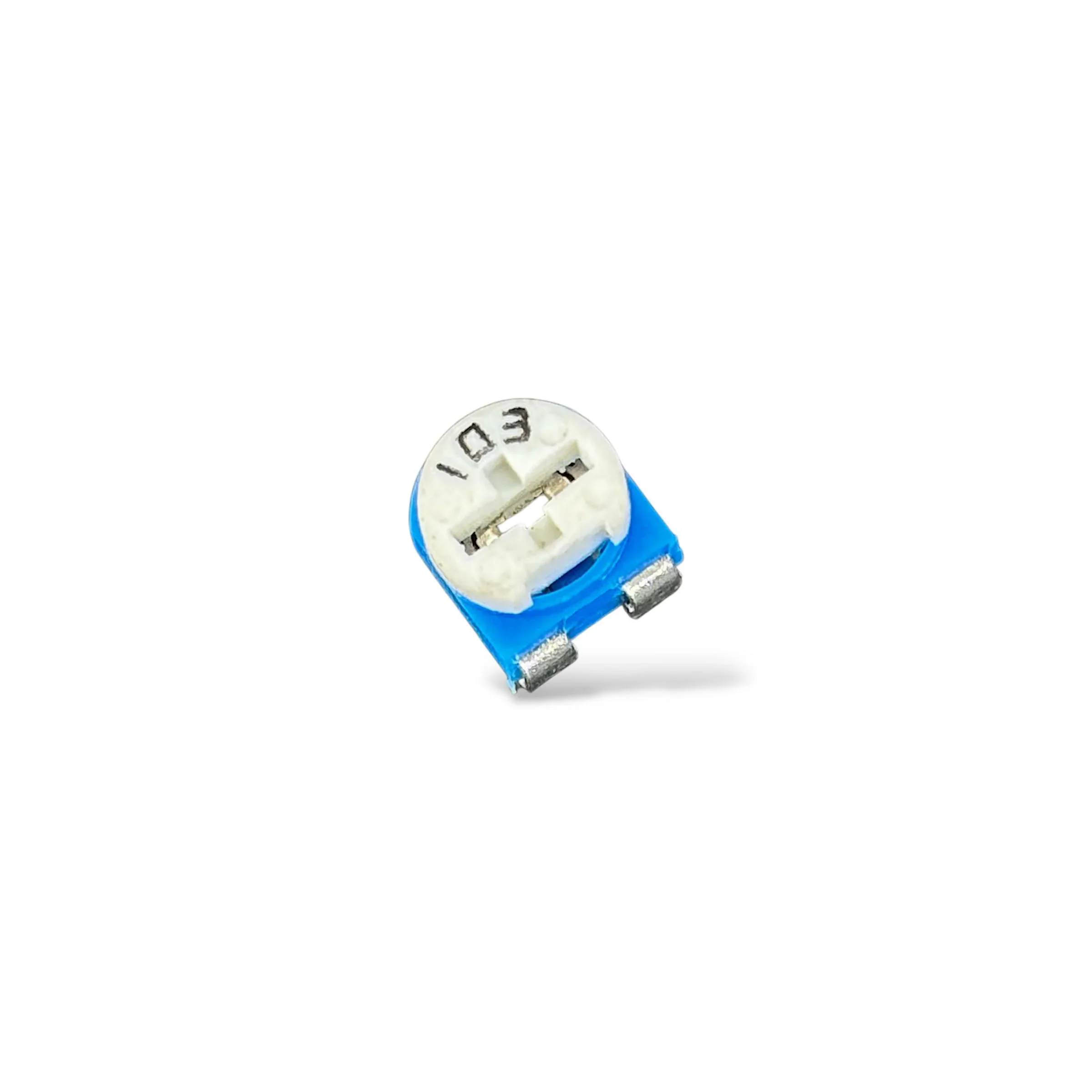
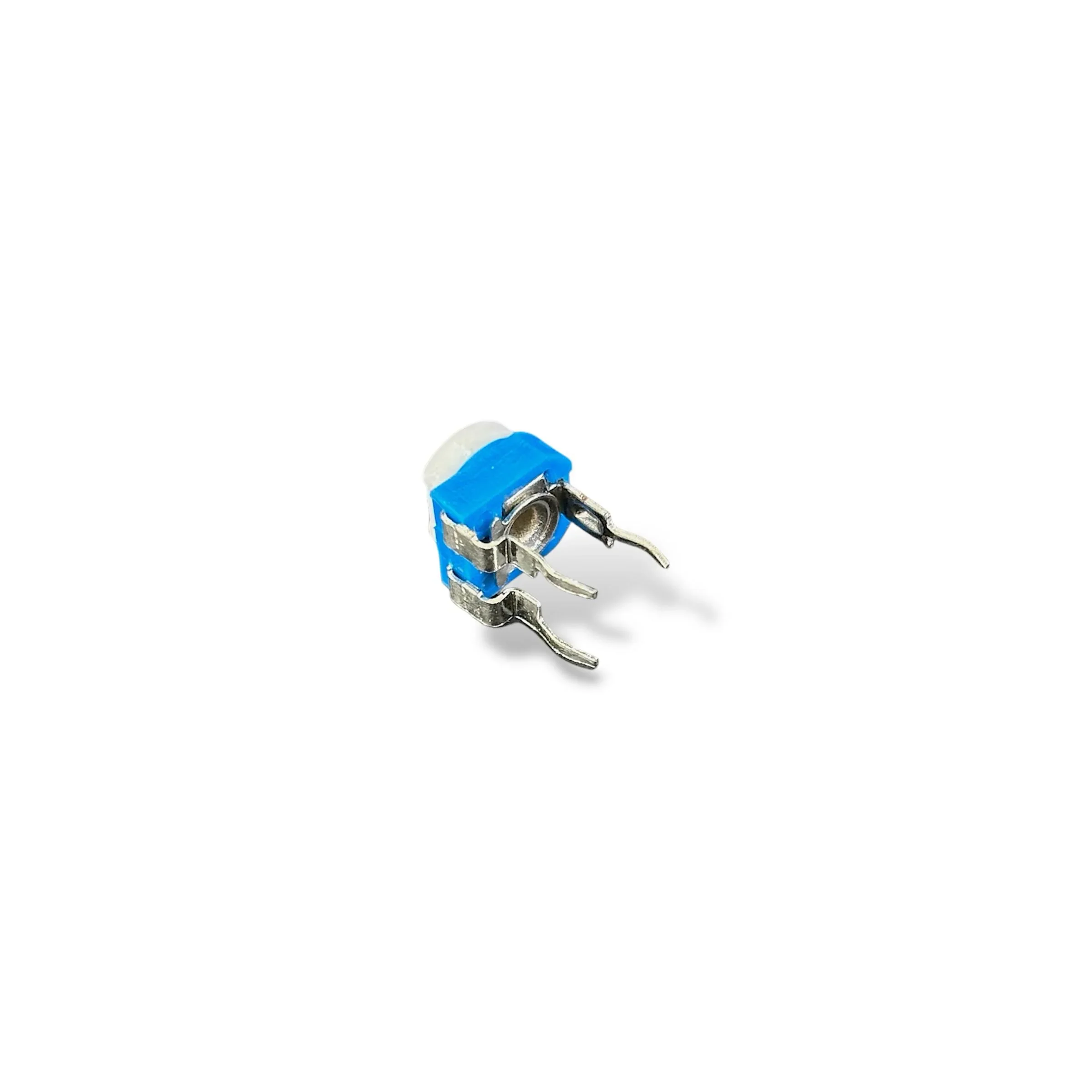
Potentiometer 10K Variable Resistor 3 Pin
Specification
- Resistance Value : 10K
- Three Pins : Two outer pins and middle pin
Description
A 10K variable resistor, commonly known as a 10K potentiometer, is an electronic component with three pins that allows for adjustable electrical resistance. Here’s a brief description of its features and usage:
1. Resistance Value: The “10K” in the name indicates the potentiometer’s nominal resistance, which is 10,000 ohms (10 kilohms). This value represents the maximum resistance between the two outer pins.
2. Three Pins:
– The two outer pins are the fixed ends of the resistor, and they are connected to the circuit. One end typically connects to the power supply, and the other end connects to the ground.
– The middle pin, called the wiper, is movable. Rotating the shaft or slider connected to the wiper changes the resistance between the middle pin and either of the outer pins.
3. Adjustability: The primary function of the potentiometer is to provide variable resistance. By turning the knob or slider, the user can adjust the resistance within the specified range (in this case, 0 ohms to 10,000 ohms).
4. Applications:
– Volume control in audio systems.
– Brightness control in lighting circuits.
– Tuning circuits in electronic devices.
– Setting reference voltages in electronic circuits.
– Calibration and adjustment in various electronic applications.
5. Linear and Logarithmic Types:
– Linear potentiometers have a uniform change in resistance per unit of rotation.
– Logarithmic (or audio taper) potentiometers are designed to mimic the way the human ear perceives changes in audio volume, making them suitable for applications like audio volume controls.
6. Physical Design:
– Potentiometers come in various physical designs, including rotary (rotating shaft) and slide (linear movement).
– Some potentiometers may have a multiturn design, allowing for more precise adjustments.
7. Shaft Dimensions: The shaft dimensions vary, and common types include knurled shafts for easy gripping and shafts compatible with knobs for rotational adjustment.
8. Tolerance: Potentiometers typically have a specified tolerance, indicating the allowable deviation from the nominal resistance value.
9. Datasheet: For specific details about a particular potentiometer, it’s essential to refer to its datasheet, which provides information on electrical characteristics, mechanical dimensions, and other relevant specifications.
When using a 10K variable resistor in a circuit, always check the datasheet for the specific model to ensure proper understanding of its characteristics and limitations.
Product Information
Product Information
Shipping & Returns
Shipping & Returns
Description
Specification
- Resistance Value : 10K
- Three Pins : Two outer pins and middle pin
Description
A 10K variable resistor, commonly known as a 10K potentiometer, is an electronic component with three pins that allows for adjustable electrical resistance. Here’s a brief description of its features and usage:
1. Resistance Value: The “10K” in the name indicates the potentiometer’s nominal resistance, which is 10,000 ohms (10 kilohms). This value represents the maximum resistance between the two outer pins.
2. Three Pins:
– The two outer pins are the fixed ends of the resistor, and they are connected to the circuit. One end typically connects to the power supply, and the other end connects to the ground.
– The middle pin, called the wiper, is movable. Rotating the shaft or slider connected to the wiper changes the resistance between the middle pin and either of the outer pins.
3. Adjustability: The primary function of the potentiometer is to provide variable resistance. By turning the knob or slider, the user can adjust the resistance within the specified range (in this case, 0 ohms to 10,000 ohms).
4. Applications:
– Volume control in audio systems.
– Brightness control in lighting circuits.
– Tuning circuits in electronic devices.
– Setting reference voltages in electronic circuits.
– Calibration and adjustment in various electronic applications.
5. Linear and Logarithmic Types:
– Linear potentiometers have a uniform change in resistance per unit of rotation.
– Logarithmic (or audio taper) potentiometers are designed to mimic the way the human ear perceives changes in audio volume, making them suitable for applications like audio volume controls.
6. Physical Design:
– Potentiometers come in various physical designs, including rotary (rotating shaft) and slide (linear movement).
– Some potentiometers may have a multiturn design, allowing for more precise adjustments.
7. Shaft Dimensions: The shaft dimensions vary, and common types include knurled shafts for easy gripping and shafts compatible with knobs for rotational adjustment.
8. Tolerance: Potentiometers typically have a specified tolerance, indicating the allowable deviation from the nominal resistance value.
9. Datasheet: For specific details about a particular potentiometer, it’s essential to refer to its datasheet, which provides information on electrical characteristics, mechanical dimensions, and other relevant specifications.
When using a 10K variable resistor in a circuit, always check the datasheet for the specific model to ensure proper understanding of its characteristics and limitations.